Already Issuing e-Invoices? Can You Stop Under Malaysia’s New RM3 Million Exemption?

LHDN e-Invoice Update 2026: RM3 Million Exemption and What SMEs Need to Know
September 4, 2026
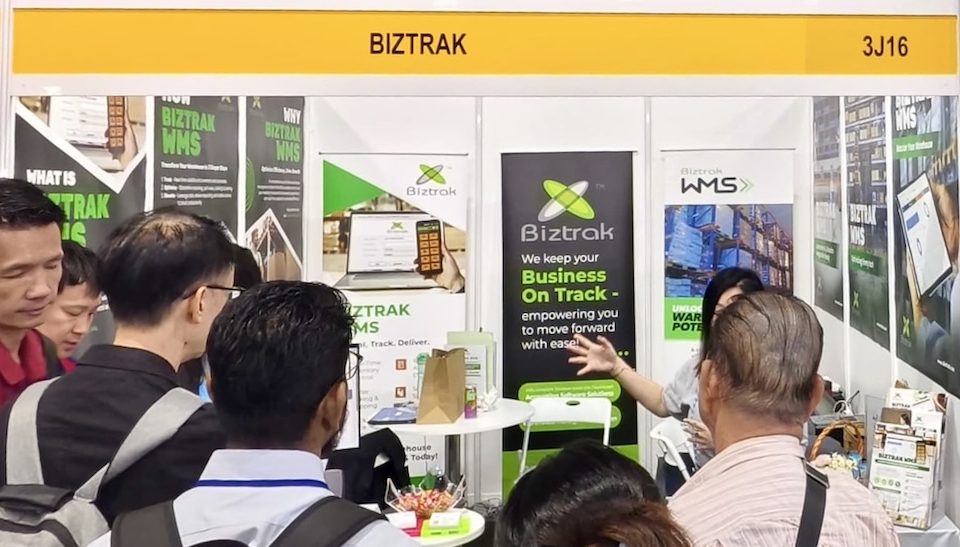
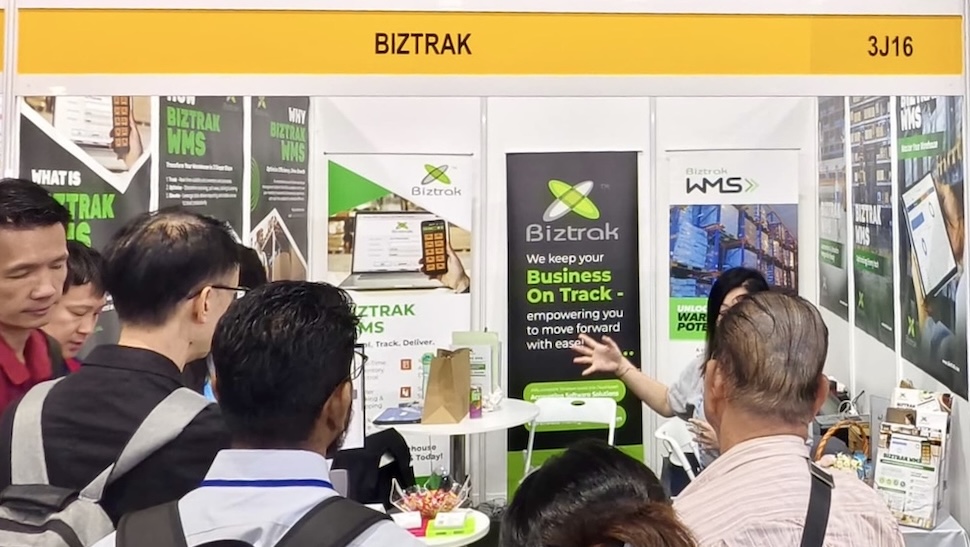
Biztrak Connects with Industry Leaders at MTE 2026
September 14, 2026
Already Issuing e-Invoices? Can You Stop Under Malaysia’s New RM3 Million Exemption?
Malaysia’s e-Invoice landscape has changed again following the Government’s decision to raise the e-Invoice exemption threshold from RM1 million to RM3 million.
The change is particularly relevant to Malaysian SMEs that have already started issuing e-Invoices in 2026 based on the previous implementation threshold.
So, if your business has annual turnover or revenue between RM1 million and RM3 million and has already implemented e-Invoice, do you still need to continue issuing e-Invoices?
The answer may be no, provided your business meets all the applicable exemption criteria under the latest e-Invoice Guideline (Version 4.8) issued by the Inland Revenue Board of Malaysia (IRBM/LHDN).
What Is the New RM3 Million e-Invoice Exemption?
Under Section 1.6.1(e) of the latest LHDN e-Invoice Guideline Version 4.8, taxpayers with annual turnover or revenue of less than RM3 million are exempted from issuing e-Invoices.
The latest guideline, dated 30 August 2026, replaces Version 4.7 and clarifies the application of this exemption under Section 1.6.10.
This means businesses that previously fell within the e-Invoice implementation requirement because their annual turnover or revenue exceeded RM1 million may now qualify for the exemption if their annual turnover or revenue is below RM3 million and they satisfy the relevant conditions.
What If Your Business Has Already Started Issuing e-Invoices?
This is one of the key questions for SMEs following the revised threshold.
For example, consider a company with:
- ● Annual turnover or revenue of RM2 million
- ● Previously required to implement e-Invoice based on the earlier threshold
- ● Started issuing e-Invoices from 1 January 2026 or 1 July 2026
- ● Subsequently qualifies for the exemption under the revised RM3 million threshold
If the company meets the applicable exemption criteria under Section 1.6.10, it may discontinue issuing e-Invoices immediately.
In other words, businesses that have already invested time and resources in implementing e-Invoice do not necessarily have to continue issuing e-Invoices simply because they have already started.
Do You Need to Apply to LHDN to Stop Issuing e-Invoices?
For businesses that qualify for the exemption, no separate application or prior approval from LHDN is required to enjoy the RM3 million exemption.
However, businesses should first confirm that they satisfy all applicable exemption criteria before discontinuing e-Invoice issuance.
Being below RM3 million in annual turnover or revenue alone does not automatically mean that a business qualifies.
Who Is Not Eligible for the RM3 Million Exemption?
Section 1.6.10 of the latest LHDN guideline specifies that the exemption for taxpayers with annual turnover or revenue below RM3 million does not apply in certain circumstances.
The exemption does not apply where:
- 1. The taxpayer has a non-individual shareholder or equivalent with annual turnover or revenue of at least RM3 million;
- 2. The taxpayer is a subsidiary of a holding company with annual turnover or revenue of at least RM3 million; or
- 3. The taxpayer has a related company or joint venture with annual turnover or revenue of at least RM3 million.
Therefore, businesses should not determine their e-Invoice exemption status based solely on their own annual revenue.
It is important to review the company's ownership structure, group relationships and related entities before deciding whether to discontinue e-Invoice.
Can Exempted Businesses Continue Issuing e-Invoices Voluntarily?
Yes.
LHDN states that taxpayers who are exempted from e-Invoice are welcome to implement e-Invoice voluntarily in support of the Government's digitalisation initiative.
For businesses that have already integrated e-Invoice into their accounting processes, continuing voluntarily may also be a practical option.
For example, an SME may prefer to maintain its existing digital invoicing workflow instead of changing its accounting processes again. An integrated accounting system can also help reduce manual data entry, improve transaction visibility and keep financial records more structured.
Ultimately, whether to stop or continue issuing e-Invoices is a business decision for an eligible taxpayer.
What Should SMEs Already Issuing e-Invoices Do?
If your business has annual turnover or revenue between RM1 million and RM3 million and has already started issuing e-Invoices, consider the following steps:
1. Review Your Annual Turnover or RevenueConfirm your latest annual turnover or revenue and determine whether it is below the RM3 million exemption threshold.
2. Check Your Business StructureReview your shareholders, holding companies, related companies and joint ventures.
A business may not qualify for the exemption if any of the conditions specified under Section 1.6.10 apply.
3. Confirm Your Exemption EligibilityDo not assume that being below RM3 million automatically makes your business exempt.
Review the latest LHDN e-Invoice Guideline and applicable exemption criteria before making any changes.
4. Decide Whether to Stop or ContinueIf your business qualifies for the exemption, you may discontinue issuing e-Invoices.
Alternatively, you may choose to continue issuing e-Invoices voluntarily.
5. Review Your Accounting SoftwareIf you decide to stop issuing e-Invoices, review your accounting or ERP system configuration to ensure that e-Invoices are not generated or submitted unnecessarily.
For businesses that choose to continue voluntarily, ensure that the accounting system remains properly configured to support the e-Invoice workflow.
What Happens If Your Business Grows Beyond RM3 Million?
The RM3 million exemption should not be viewed as a permanent exemption regardless of future business growth.
Businesses should continue monitoring their annual turnover or revenue as they grow.
Under the latest LHDN guideline, the e-Invoice implementation timeline is determined according to the applicable rules and circumstances. For taxpayers reaching the RM3 million threshold in YA2026 or later, the implementation date is generally 1 January of the second year following the year in which the RM3 million threshold is reached.
This means SMEs should continue monitoring their revenue and remain prepared to implement e-Invoice when the applicable requirement takes effect.
e-Invoice Is More Than a Compliance Requirement
While the new RM3 million exemption provides greater flexibility for smaller businesses, e-Invoice can still offer operational benefits to SMEs that choose to continue voluntarily.
When integrated with an accounting system, e-Invoice can work alongside core financial functions such as:
- ● General Ledger
- ● Sales
- ● Purchase
- ● Cash Management
- ● Fixed Assets
- ● Tax Management
- ● e-Invoicing
Rather than treating e-Invoice as a standalone compliance requirement, businesses can use an integrated accounting system to streamline financial processes, reduce manual work and improve visibility over business transactions.
For growing SMEs, remaining e-Invoice-ready can also make it easier to adapt when business revenue increases or regulatory requirements change.
What Does the RM3 Million Exemption Mean for Your Business?
For SMEs that have already implemented e-Invoice in 2026, the increase of the exemption threshold from RM1 million to RM3 million provides an opportunity to reassess their current e-Invoice requirements.
If your business has annual turnover or revenue below RM3 million, you may be able to discontinue issuing e-Invoices without submitting a separate application to LHDN, provided you meet all the applicable exemption criteria.
At the same time, eligible businesses can choose to continue issuing e-Invoices voluntarily as part of their digitalisation efforts.
The key takeaway is simple:
Don't automatically assume that you must continue issuing e-Invoices just because you have already started. But don't stop issuing them solely because your revenue is below RM3 million either. Check the exemption criteria first.
Stay Ready as Your Business Grows
The new RM3 million e-Invoice exemption gives Malaysian SMEs greater flexibility while allowing businesses to decide whether voluntary e-Invoice adoption makes sense for their operations.
Whether you choose to stop or continue, it is important to review your turnover, business structure and accounting processes against the latest LHDN requirements.
For businesses that remain subject to e-Invoice requirements — or prefer to continue voluntarily — having an e-Invoice-ready accounting system can make digital invoicing more manageable.
The e-Invoice Implementation Timeline
The broader phased implementation timeline remains as follows:
| Taxpayer Annual Turnover / Revenue/th> | Implementation Date |
|---|---|
| More than RM100 million | 1 August 2024 |
| More than RM25 million to RM100 million | 1 January 2025 |
| More than RM5 million to RM25 million | 1 July 2025 |
| Up to RM5 million | 1 January 2026 |
Importantly, LHDN states that once a taxpayer's implementation timeline has been determined, subsequent changes in annual turnover or revenue do not change the taxpayer's implementation obligation.
This makes it important for businesses to understand their applicable implementation status rather than relying solely on their current-year revenue.
MyInvois Portal or API: Which Option Is Right for Your SME?
For businesses that remain subject to e-Invoice, LHDN provides two main transmission mechanisms: MyInvois Portal and API integration.
1. MyInvois Portal
The MyInvois Portal enables taxpayers to generate e-Invoices individually or through batch generation using spreadsheet uploads.
For SMEs with a relatively small volume of transactions, this can provide a straightforward way to issue e-Invoices without investing heavily in system integration.
2. API Integration
Businesses handling higher transaction volumes can integrate their accounting or ERP system directly with the MyInvois System through an API.
The API can also be implemented through Peppol or non-Peppol technology providers.
For growing SMEs, an integrated accounting system can provide a more efficient approach by reducing duplicate data entry and connecting invoicing with existing sales, purchase and accounting processes.
Why SMEs Should Look Beyond Compliance
For many SME owners, e-Invoice may initially be viewed as another regulatory requirement.
But the transition also presents an opportunity to improve the way the business manages its financial information.
A properly integrated accounting system can help businesses:
- ● Reduce manual invoice processing;
- ● Minimise duplicate data entry;
- ● Improve the accuracy of financial records;
- ● Streamline sales and purchase documentation;
- ● Maintain better transaction visibility;
- ● Prepare information required for e-Invoice submission; and
- ● Reduce the administrative burden as the business grows.
LHDN's guideline provides for e-Invoices to be transmitted through the MyInvois Portal or API, with businesses responsible for ensuring that the information submitted is complete and accurate.
For SMEs, this makes accounting system readiness an important part of e-Invoice preparation, rather than treating e-Invoice as an isolated invoicing exercise.
How Biztrak Can Help SMEs Prepare
For SMEs that need to comply with e-Invoice requirements, having an accounting system that supports the business's day-to-day financial processes can make the transition more manageable.
Both Biztrak MSB accounting software and Biztrak Online Cloud Accounting provide essential accounting functions, including General Ledger, Sales, Purchase, Cash Management, Fixed Assets, Tax Management and e-Invoicing. Together, they offer businesses a comprehensive accounting solution to manage day-to-day financial operations while supporting Malaysia’s evolving e-Invoice requirements..
By connecting accounting processes within one system, SMEs can reduce reliance on disconnected spreadsheets and manual processes while preparing their financial data for digital reporting requirements.
For businesses that need more comprehensive integration, Biztrak's e-Invoice capabilities can help streamline the flow from business transactions to e-Invoice submission, allowing businesses to manage their accounting and compliance requirements within a more structured workflow.
The objective is not simply to "do e-Invoice", but to build a more efficient financial management process that can scale with the business.
As Malaysia continues its transition towards digital tax administration, staying updated with LHDN's latest requirements—and having the right accounting infrastructure in place—will be increasingly important for SMEs.
Source: Inland Revenue Board of Malaysia (LHDN/IRBM), e-Invoice Guideline Version 4.8, published 30 August 2026.
This article is intended for general information only and does not constitute tax, accounting or legal advice. Businesses should refer to the latest LHDN guidance or consult a qualified tax professional for advice specific to their circumstances.
For the latest official information, refer to the E-Invoice Guideline (Version 4.8) published by LHDN. If you have questions about implementing or upgrading your e-Invoice solution, contact us as we're ready to help your business stay compliant with confidence.