- Extended Support for Phase 4: For businesses in Phase 4, the initial interim relaxation period (originally ending 31 December 2026) has now been officially extended until 31 December 2027. This additional year provides SMEs and micro-businesses ample time to integrate their digital solutions without the pressure of immediate enforcement.
- Consolidated e-Invoice Flexibility: During this interim period, all taxpayers are allowed to issue consolidated e-invoices (including for transactions where individual e-invoices would normally be required) to help manage the initial administrative load.
- Full Compliance Deadline: The update emphasizes that this "soft landing" is temporary. By the end of the specified grace period—ending as late as December 2027 for Phase 4—full adherence to real-time validation for all transactions becomes mandatory.
- Malaysian Citizens: Sellers only need to capture the TIN or the MyKad/MyTentera number. Providing both is no longer a strict requirement for the interim period.
- Non-Citizens: If a foreign buyer does not have a Malaysian TIN, sellers can now use the General TIN (EI00000000020) alongside the buyer’s passport number.
- The 7-Day Rule: Consolidated e-invoices must be submitted within 7 calendar days after the end of the month.
- Technical Constraints: Each submission is capped at a maximum file size of 5MB and can contain no more than 100 e-invoices.
- Proof of Expense: E-invoices issued in the name of the employee are now officially accepted as valid proof for tax deduction purposes by the employer.
- Foreign Expenses: For perks provided by foreign suppliers, businesses are exempt from issuing self-billed e-invoices, provided the benefit is documented in the company's internal HR policy.
As Malaysia moves closer to full e-invoicing adoption, the Inland Revenue Board (LHDN) continues to refine its framework to ensure a smoother transition for businesses. The release of the Specific e-Invoice Guidelines Version 4.7 introduces critical updates, particularly concerning the Interim Relaxation Period and administrative flexibility.
For Biztrak users and the wider business community, understanding these amendments is key to maintaining compliance while managing operational workflows. Here’s a detailed breakdown of the latest changes.
1. Extended Interim Relaxation Period: A Strategic Grace Period
The most significant highlight of Version 4.7 is the formalized Interim Relaxation Period, designed to give taxpayers breathing room to stabilize their systems.
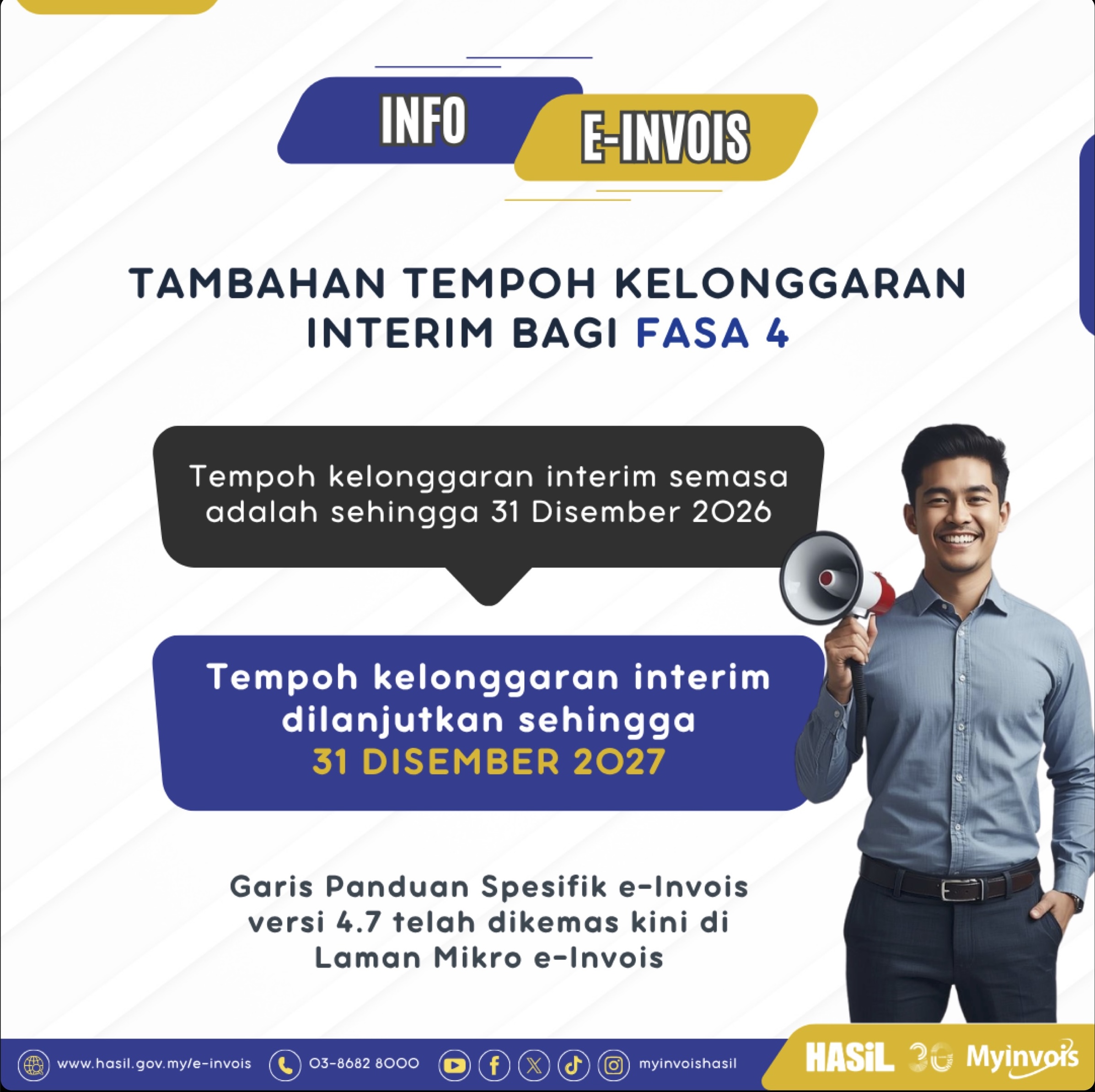
A major update to note is the significant extension for the final rollout group:
2. Enhanced Clarity on Individual Buyer Data
Version 4.7 simplifies the data requirements for individual buyers (B2C), making it easier for sellers to gather information without causing friction at the point of sale:
3. Operational Rules for Consolidated e-Invoices
To maintain the efficiency of the MyInvois System, LHDN has introduced specific "weight limits" for consolidated submissions:
4. Employee Perks & Reimbursements
A welcomed amendment in this version is the treatment of employee benefits. LHDN now allows:
Staying Compliant with Biztrak
At Biztrak, we are committed to ensuring our Biztrak MSB and Biztrak Online accounting software solutions stay ahead of these regulatory shifts. The extension of the relaxation period for Phase 4 until 31 December 2027 is a clear sign that LHDN is providing the necessary flexibility to make e-invoicing a success for every scale of business.
Review your current procurement and sales processes against the updated Table 16.1 Interim Relaxation Schedule to ensure you are maximizing the grace period while preparing your systems for 2027.