Beyond Accounting: Connecting Manufacturing and Finance with Biztrak and Ostendo

Wishing All A Happy Deepavali!
November 5, 2026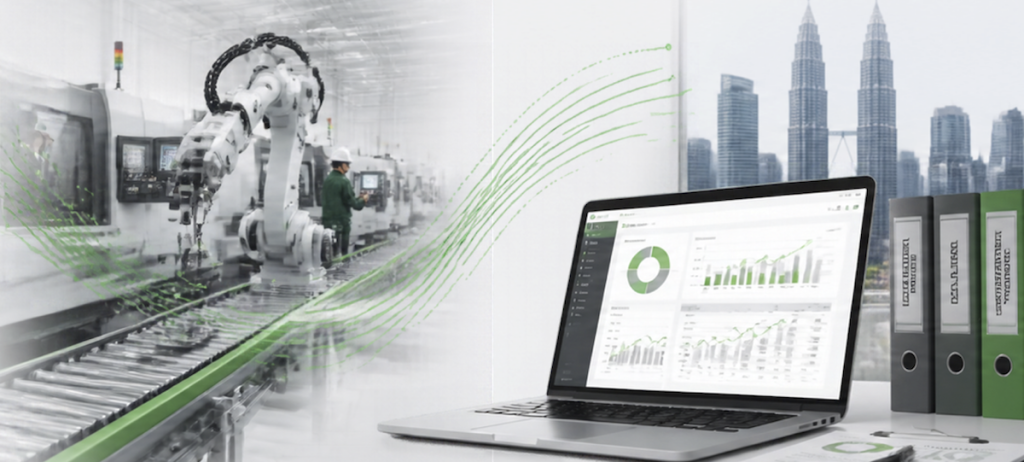
Beyond Accounting: Connecting Manufacturing and Finance with Biztrak and Ostendo
How connecting manufacturing and accounting can help established businesses reduce repetitive work, improve cost control and prepare for future growth.
1. A Successful Business Can Always Find Ways to Improve
Many manufacturing companies in Malaysia have been operating successfully for decades. They have built strong customer relationships, developed experienced employees and established working processes that have supported the business over the years.
For many of these businesses, Biztrak Accounting is already an important part of their daily operations. The accounts department is familiar with the software and relies on it to manage financial records and reporting.
However, the manufacturing side of the business may work differently.
Production planning might still be managed through Excel spreadsheets, Microsoft Access or paper documents. Material usage is recorded separately, while production progress is tracked through manual updates.
These processes may have worked well for many years, but as business requirements change, they can become more difficult to manage. The challenge is not necessarily that the company needs more employees or a completely new system.
Sometimes, it is simply about finding a better way for existing departments to work together.
How can a company improve its internal processes, reduce unnecessary work and make the business easier to manage for the next generation?
2. The Everyday Challenges That Are Easy to Overlook
Understanding the Actual Cost of ManufacturingMost manufacturing companies know their selling prices and purchasing costs. But understanding the actual cost of producing an order is not always straightforward.
For example, a company receives a customer order worth RM100,000.
The sales value is recorded in Biztrak, and material purchases are reflected in the accounts.
However, how much material was actually consumed during production? How many working hours were required? Was there additional wastage, rework or overtime?
If production information is maintained separately, the accounts department may need to collect figures from different employees and manually calculate the costs.
By the time management receives the report, the company may already be preparing the next production order.
Without timely manufacturing cost information, it can be difficult to understand which jobs are profitable and where costs can be better controlled.
Why Are We Entering the Same Information Several Times?
Another familiar situation is the amount of paperwork moving between departments.
A customer places an order.
The sales department records the information, the production team enters it into another spreadsheet, and the warehouse prepares separate records for material usage.
When production is completed, the accounts department may need to collect documents and enter the relevant information into Biztrak. The same information may be recorded two or three times.
Apart from taking up employees' time, repeated data entry creates opportunities for mistakes and delays.
When order details change, different departments may also end up working with different versions of the information.
The time spent checking records, correcting errors and following up with colleagues is an operating cost that businesses may not always notice.
When Too Much Depends on Experienced Employees
Many established manufacturing companies have long-serving employees who know their operations extremely well.
Their experience is valuable, especially when it comes to production planning, material requirements and resolving unexpected problems.
However, some companies depend heavily on these employees for everyday decisions.
When a production supervisor takes leave, other employees may still need to call to confirm job priorities, material requirements or work instructions.
This creates pressure on experienced employees and makes it difficult for others to take on additional responsibilities.
It can also become a concern when management begins preparing the next generation to take over the business.
The objective should not be to replace experienced employees, but to preserve their knowledge and make it easier for others to learn from them.
3. Improving Manufacturing Without Replacing What Already Works
When companies consider improving their manufacturing operations, one common concern is whether they need to replace their existing accounting software.
For businesses already using Biztrak, this may not be necessary.
The accounting team has invested time in learning the software and establishing familiar working procedures.
Introducing a completely new accounting system could create additional costs, require retraining and disrupt daily operations.
The same concern applies to employees.
Long-serving staff may be comfortable with existing processes and uncertain about changes involving new technology.
Rather than replacing everything, a more practical approach is to identify which manufacturing processes need improvement and determine how they can work alongside the existing Biztrak Accounting system.
For example, the company may want to improve production planning, monitor actual material usage or obtain more accurate manufacturing costs.
These are manufacturing requirements that can be addressed separately while retaining the accounting system already in place.
The question is not whether the company needs to change its existing systems, but how it can connect the information that is currently managed separately.
4. How Biztrak Accounting and Ostendo Manufacturing Complement Each Other
Biztrak and Ostendo have worked together over the years, with several Biztrak customers adopting Ostendo to manage their manufacturing operations.
Both solutions serve different but complementary purposes.
Biztrak continues to support accounting and financial management, while Ostendo Manufacturing helps companies manage production planning, material requirements, job progress and manufacturing costs.
When properly integrated, relevant information can be shared between manufacturing and accounting, reducing the need for employees to repeatedly enter or manually consolidate the same information.
Consider how this could work in a manufacturing business.
When a customer order is received, the production team can use Ostendo Manufacturing to plan the work, determine material requirements and monitor progress.
As production takes place, material usage and related job costs can be recorded.
This gives the company a clearer understanding of what is happening during manufacturing.
Relevant information can then be shared with Biztrak through an agreed integration process, supporting the company's existing accounting activities.
The benefits go beyond reducing paperwork.
With more consistent information, finance and production teams can work together to understand manufacturing costs, identify wastage and review areas where operating expenses can be reduced.
Production information also becomes easier to share among employees, reducing the need to depend on one person for every routine decision.
Most importantly, these improvements do not need to happen all at once.
A company can begin with the processes that are creating the most unnecessary work and gradually introduce improvements based on its operational needs.
Biztrak continues doing what it does well, while Ostendo Manufacturing helps manage the manufacturing activities that may currently depend on spreadsheets and manual records.
5. Building a Business That Is Easier to Manage
Improving manufacturing operations is not just about introducing new software.
It is about making everyday work easier for the people who keep the business running.
When production information is recorded and shared more consistently, the accounts department can spend less time collecting figures and more time reviewing costs.
Production teams can reduce repeated paperwork and focus more on completing customer orders.
Experienced employees can share their knowledge, guide younger colleagues and delegate routine responsibilities with greater confidence. Management can obtain a clearer picture of manufacturing operations without repeatedly requesting updates from different departments.
These improvements also help companies prepare for the future.
As business owners plan for leadership changes, having clearer processes and better access to information can make it easier for successors to understand how the company operates.
They can continue building on the experience of existing employees and the systems that have supported the business for many years.
For companies already using Biztrak Accounting, connecting with Ostendo Manufacturing offers an opportunity to strengthen manufacturing operations without necessarily replacing familiar accounting processes.
The first step does not have to be a major software project.
It may simply begin with a discussion between management, finance and production:
Are we spending too much time entering the same information? Do we know the actual cost of our manufacturing jobs? Are our daily operations too dependent on a few experienced employees?
These are useful questions for any manufacturing company looking to improve productivity and manage costs.
A successful business is built by people. The right software should help them work better together, reduce unnecessary workload and make the business easier to manage today and for the next generation.
Explore Ostendo Manufacturing and find out how Ostendo Manufacturing can complement your existing accounting system and help improve daily operations.